By DK, Riverd Founder. Last updated: 2026-10-13.
A client comes back after three weeks and says, "My shoulder is better, but the left side of my neck is still stuck." Good SOAP notes for massage therapy let you answer with what you did last time, what changed, and what you planned to try next. Without them, you start the session from zero and the client can tell.
Most writing about SOAP notes treats them as compliance: the record you keep in case a licensing board, an insurer, or a lawyer asks. That job is real. This post is about the second job, which gets far less attention. A note written for the next session is the cheapest retention tool a solo practice has, because it turns "I see a lot of people" into "I remember you." Below is a template built around that job, and a checklist for the minute before a returning client walks in.
What should SOAP notes for massage therapy include?
SOAP notes for massage therapy include four parts. Subjective is what the client reports, in their words. Objective is what you observed and did: posture, palpation findings, range of motion, techniques, areas, and pressure. Assessment is how the tissue responded during the session. Plan is what comes next: home care, focus for the next visit, and the suggested return interval.
The National Certification Board for Therapeutic Massage and Bodywork sets a floor for this in its Standards of Practice. Standard IV(c) asks certificants to "maintain adequate progress notes for each client session," and the glossary defines progress notes as notes that "indicate the date of the session, areas of complaint as stated by client, and observations made and actions taken by the practitioner." Standard I(i) adds that you "develop a plan of care with the client, and update the plan as needed." Your state board may ask for more, so check its rules as well.
One scope point matters in the Assessment line. Many state practice acts do not allow massage therapists to diagnose. Write what you found and how the tissue responded ("upper trapezius less guarded after 10 minutes of myofascial release"), and leave diagnostic labels to the client's physician.
How do SOAP notes help with client retention?
SOAP notes help with client retention because they let you pick up exactly where the last session ended. A returning client who hears you mention their left rotation, the pressure they liked, and the stretch you suggested knows you remember them. That continuity is hard for a new therapist to match, and it gives the client a concrete reason to rebook with you.
It also changes what you say at the end of a session. "Come back whenever" is easy to forget. "Last time your neck rotation was about 60 degrees to the left and today it was closer to 70, so I'd like to see you in two weeks and work the levator scapulae" gives the client a reason and a date. The only way to say that sentence is to have written down last session's number.
For the revenue side of this, including why one regular is worth more than several one-off visits, see where revenue lives: recurring vs sporadic clients. The short version is that a solo practice runs on returning clients, and the Plan line is where you ask for the return.
How do you write a SOAP note for massage therapy that the next session can use?
To write a SOAP note for massage therapy that the next session can use, give every section one line your future self will need. Record the client's own phrase in Subjective, one measurable finding in Objective, the tissue's response in Assessment, and a specific Plan with a focus area and return interval. Write it within an hour of the session, while the details are still clear.
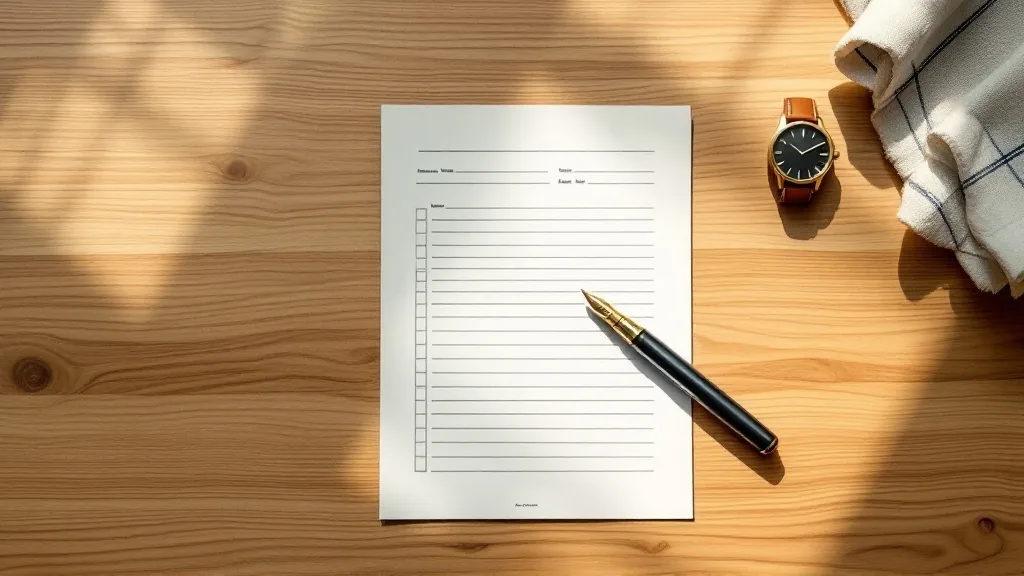
The template below is the one to copy. It fits in the space of a short text message per section, and it puts the continuity lines (the ones you will read next time) in the places a busy practitioner actually looks.
Date and session: 60 min, returning client, visit 4
S (Subjective): Client's words about the main complaint, pain level 0 to 10 if they give one, and anything new since last visit (new job, injury, pregnancy, medication change).
O (Objective): Posture and palpation findings. One measurable number, such as cervical rotation left and right or a pain rating on a specific movement. Techniques used, areas worked, and pressure level.
A (Assessment): How the tissue and the client responded during the session. What eased, what did not, and anything that surprised you.
P (Plan): Home care you suggested. Focus for next visit. Suggested return interval, and whether the client booked.
Carry forward: One sentence to read before the next session. What you promised to check or try.
Personal note: One detail the client mentioned that you would want to ask about, if it is appropriate for the record (a race they were training for, a trip).
Here is what a filled-in version looks like for a hypothetical desk worker on their fourth visit:
S: "Shoulder is better, left side of neck still stuck." Pain 4/10 turning to check blind spot while driving. Started a new job with two monitors.
O: Left upper trapezius and levator scapulae hypertonic, tender point at superior angle of scapula. Cervical rotation roughly 60 degrees left, 75 right. Swedish warm-up, myofascial release and trigger point work to left upper trapezius and levator scapulae, moderate to firm pressure.
A: Trapezius softened after about 10 minutes. Levator scapulae still guarded at end of session. Rotation left roughly 70 degrees after work.
P: Suggested checking monitor height and a gentle levator scapulae stretch twice a day. Next visit: start with levator scapulae, recheck rotation. Return in 2 weeks. Booked.
Carry forward: Ask whether the monitor change helped. Recheck left rotation first.
Personal note: Half marathon in November.
The "Carry forward" and "Personal note" lines sit outside the four SOAP headings on purpose. They are for you, and they are the two lines that make the next session feel continuous. Keep personal details short, relevant, and something the client would be comfortable seeing in their own file, since clients may have a right to request their records under your state's rules. If speed is the sticking point, how to write SOAP notes faster covers the time side of the same habit.
What should you read before a returning client's session?
Before a returning client's session, read the last note's Plan and Carry forward lines, their most recent measurable finding, and any intake answers that changed. That takes about a minute and covers what the client expects you to remember. If you only have time for one thing, read the Carry forward line and open the session with it.
The 60-second checklist:
- Read the last Plan line. What did you say you would work on first?
- Read the Carry forward line. What did you promise to check?
- Note the last measurable finding, so you can compare it today.
- Scan for changes since last visit: a new intake form, medication, injury, or pregnancy.
- Read the Personal note, and decide whether to mention it.
- Confirm the pressure and areas to avoid, even if nothing has changed.
The opening line of the session then writes itself: "Last time we got your left rotation to about 70 degrees and I wanted to start with the levator today. Did the monitor change help?" A client who hears that in the first minute knows the previous session was recorded and used. For the first-visit version of this conversation, see our new client intake conversation script.
Which software keeps SOAP notes and client retention in one place for small practices?
Software for a small practice should keep each session's notes on the client's record, so the history is one tap away before the next visit. Look for notes attached to the session itself, a client view that lists past sessions with their notes, notes that stay private from the client, and no extra charge for writing them. Paper works too, if you actually read it before the session.
In Riverd, you write notes on the session screen, and every session's notes appear on that client's Sessions tab, so the last Plan line is visible before they arrive. Session notes are private to you and are never shown to the client. Writing notes is included on every plan, including Brook, which is free up to 20 appointments a month. On every plan, you can type a rough summary and Reed, Riverd's AI assistant, formats it into Subjective, Objective, Assessment, and Plan for you to review and edit, using your plan's monthly AI credits. Reed works only from what you type. There is no microphone, no recording, and no transcription anywhere in the product.
For findings that are easier to draw than describe, the Patient Book lets you mark areas on anatomical body diagrams and link the book to a session. Brook includes up to 3 saved books, and River and Fjord include unlimited books. You can read more about the notes workflow on the AI SOAP notes page, see everything Riverd does for massage therapists on our massage therapy software page, or try the free SOAP note generator without an account. More on the client relationship lives in the client experience hub.
Key Takeaways
- A SOAP note has two jobs: the professional record, and a brief for the next session.
- Put one measurable finding in Objective so you can show progress next visit.
- Make the Plan specific: a focus area, a return interval, and whether the client booked.
- Read the Plan and Carry forward lines in the minute before a returning client arrives.
This is for informational purposes only and does not constitute medical or legal advice. Documentation, record retention, and scope of practice requirements vary by state, so check with your own licensing board.
Ready to simplify your practice? Get started with Riverd →