
By The Riverd Team. Last updated: 2026-10-02.
Workflow reviewed against NCBTMB Standards of Practice and AMTA practice resources as of June 2026.
This article is for informational purposes only and does not constitute legal or clinical advice. Always meet your state board's documentation requirements and any contracted-payer rules.
If you want to know how to write SOAP notes faster without dropping the quality your license requires, the short version is this: build a template you can fill in three lines per field, carry context forward from the last session, and dictate the parts that are easier to say than to type. Solo LMTs running a full book usually move from 15 minutes per note to under 5 once those three habits stack. The rest of this guide is the specifics.
Why SOAP notes take so long (and what is actually slow about them)
Watch a busy practitioner write a SOAP note and the slow parts are predictable. Re-reading the previous note to remember where the client was. Retyping the chief complaint that has been the same for six visits. Reformatting bullets and headers so the note looks consistent. The fast parts, the parts that need your clinical brain, are usually assessment and plan. Those are short and you already know what to write.
So the bottleneck is rarely thinking. It is retyping context that should have carried forward and reformatting prose that should have been a template. Take a typical 60-minute deep tissue follow-up: maybe 90 seconds of actual decisions ("plan: progress to deeper trigger work on left QL, recheck SI joint mobility") sit inside 13 minutes of retyping intake history, copy-pasting modality language, and making the bullet list line up.
The fix is not to write less. Your state board, your malpractice carrier, and any future auditor expect a real chart. The fix is to write the same quality with fewer keystrokes. A pre-built session-type template handles the formatting. Carry-forward context handles the history. Voice dictation handles the parts that are faster to say. Stack those three and 15 minutes becomes 5. The next three sections are what each piece looks like in practice.
The 4 moves that cut a SOAP note from 15 minutes to 5
1. Build a template for each service type. A 60-minute deep tissue note, a 90-minute relaxation note, and a 30-minute focal note all need different prompts. One generic template forces you to delete fields you do not use. Service-type-specific templates do the opposite: each one prompts you for exactly the four to six things that matter for that session length and modality. We have a copy-paste-ready version in the next section.
2. Carry forward last session's plan into this session's subjective. If your plan on visit 3 was "progress to deeper QL work, recheck SI joint", that is the first thing the client is going to mention on visit 4, and it is also what your subjective should reference. Pulling it forward saves about 60 seconds per note and tightens continuity, which is exactly what insurance reviewers look for. Any modern practice software can do this in one click. Doing it by hand still beats retyping.
3. Dictate the subjective and assessment. Average typing speed sits around 40 words per minute for most people. Speech-to-text on a recent iPhone or Android handles 120-plus words per minute and is accurate enough to clean up in 10 seconds. Stanford's 2016 study on dictation (Ruan et al.) put dictation at roughly three times the speed of typing on a touchscreen with a comparable error rate after correction. The subjective and the assessment are the most narrative parts of the note, which means they are exactly where dictation pays off.
4. Use AI drafting where it actually helps, with a real review step. AI tools can take a 30-second voice memo of "client reports right hip stiffness, improved 30% since last visit, worked QL and glute med, prescribing daily hip flexor stretch" and turn it into a structured SOAP draft. That is genuinely useful, but only if you read, edit, and sign every draft. We covered the legitimacy and audit side in our AI SOAP notes for insurance guide so will not rehash it here. The TL;DR: AI drafts are fine when you sign them.
With Riverd's AI SOAP Notes, you type a short summary of the session and Reed · AI formats it into a structured SOAP draft. There is no microphone, no recording, and no transcription. You review and sign. Drafting is on every plan, including the free Brook plan for up to 20 appointments a month, and uses your monthly AI credits.
The template that works for 80% of sessions
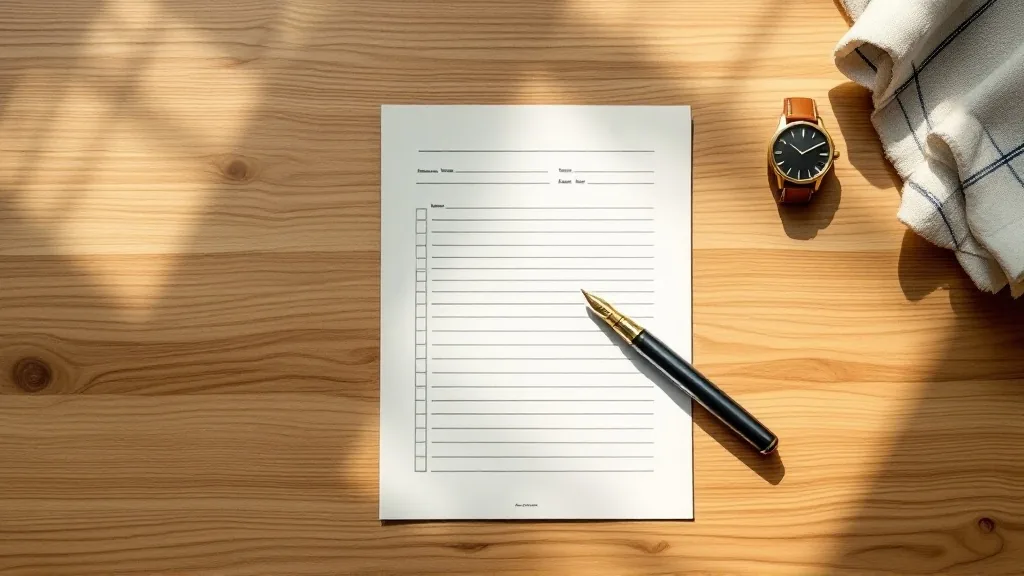
Here is a copy-paste SOAP template tuned for a typical 60-minute massage session. Three lines for S, three for O, two for A, two for P. Ten lines total, fillable in roughly 90 seconds with dictation.
S (Subjective)
- Chief complaint:
- Change since last session:
- Relevant context (sleep, stress, activity):

O (Objective)
- Posture and palpation findings:
- Modalities and regions worked:
- Client tolerance and response during session:

A (Assessment)
- Tissue or symptom-level finding:
- Progress vs. last session:

P (Plan)
- Next session focus and frequency:
- Home care or self-care assigned:
You can grab the same structure as a printable PDF from our free SOAP note generator, which also formats it for the most common service types. If you want a deeper walkthrough of the why behind each field, the practice growth hub on AI in wellness has more on documentation workflows.
How to adapt for sports massage, oncology, and prenatal
For sports massage, add an O-line for performance markers (ROM in degrees, strength on a 1 to 5 scale, sport-specific movement screen) and a P-line for return-to-training notes if the client is in-season. For oncology massage, add an S-line for treatment status (active treatment, recovery, survivorship), a contraindication check in O (lymph node clearance, port location, platelet count if known), and a P-line for the next clearance touchpoint. For prenatal, add an S-line for trimester and any provider-noted complications, an O-line for positioning used (side-lying, semi-reclined), and a P-line that defers to the OB or midwife for any flag. Each of those is one extra line, not a new template.
A solo LMT in Denver running 22 sessions a week tested this exact template for a month and cut SOAP-note time from about four hours per week (around 11 minutes per note) to 75 minutes per week (around 3.5 minutes per note). The template handled the structure. Carry-forward handled the history. Dictation handled the narrative. None of her notes got shorter or thinner. They just stopped including 15 lines of retyped intake.
What NOT to skip even when you are rushing
The point of a fast workflow is not a thinner chart. It is the same chart with less typing. If you are ever down to the last 90 seconds before your next client and you have to triage, three things have to make it into the note no matter what.
First, the chief complaint and any contraindications. If the client mentioned a new medication, a recent injury, or anything that changed your hands-on plan, that has to be in S or O. This is the line your malpractice carrier and your state board care about most. Skip it and you have a chart that does not match the session.
Second, any abnormal findings on assessment. If you found a trigger point that referred unexpectedly, a posture asymmetry that was not there last visit, or tissue that responded differently than you expected, write it down. One sentence is fine. The point is that the next time this client books, future-you can read the note and remember the actual finding.
Third, a clear plan for the next session. Not "continue work" or "see again". Something specific: "progress to deeper trigger work on left QL, recheck SI joint mobility, two weeks". This protects continuity and gives next session's note a starting point, which loops back to the carry-forward principle from H2 2.
Everything else (modality language, formatting, full sentences in S) can be templated, dictated, or auto-filled. Those three things cannot. If a faster note ever means dropping any of the three, the answer is to make the rest of the workflow faster, not to thin the note. Speed and quality are not in tension when the template is doing the boring work.
Key Takeaways
- Most SOAP notes are slow because LMTs retype context that should be carried forward from last session.
- A pre-built template, carry-forward context, and voice dictation cut typical note time from 15 minutes to 5.
- AI drafting tools work when paired with a real review step. See our companion post on AI SOAP notes for insurance.
- Three things never to skip even when rushing: chief complaint and contraindications, abnormal findings, and a specific next-session plan.