

Executive summary
A full-time independent massage therapist in the United States grosses, on average, around $113,900 a year in client-facing revenue. That number hides a wide range: the bottom of our modeled distribution earns about $62,700, and the top earns about $185,900. Most of the difference is not hours worked. It is no-shows, retention, and metro pricing.
This report maps those three forces across a 16-week window of activity in a 40,917-booking synthetic dataset calibrated to public industry benchmarks. Five numbers worth starting with:
- Median annualised revenue: $113,902 per massage therapist. Range: $62,740 to $185,941.
- No-show rate: 6.14 percent of past-dated bookings. The cost to a typical LMT: about $7,318 per year.
- Recurring clients: 64.4 percent of massage clients are recurring, and they drive 83.3 percent of revenue.
- Metro pricing spread: a 60-minute massage averages $180 in Boston and $109 in Houston. A 1.65x spread across 11 US metros.
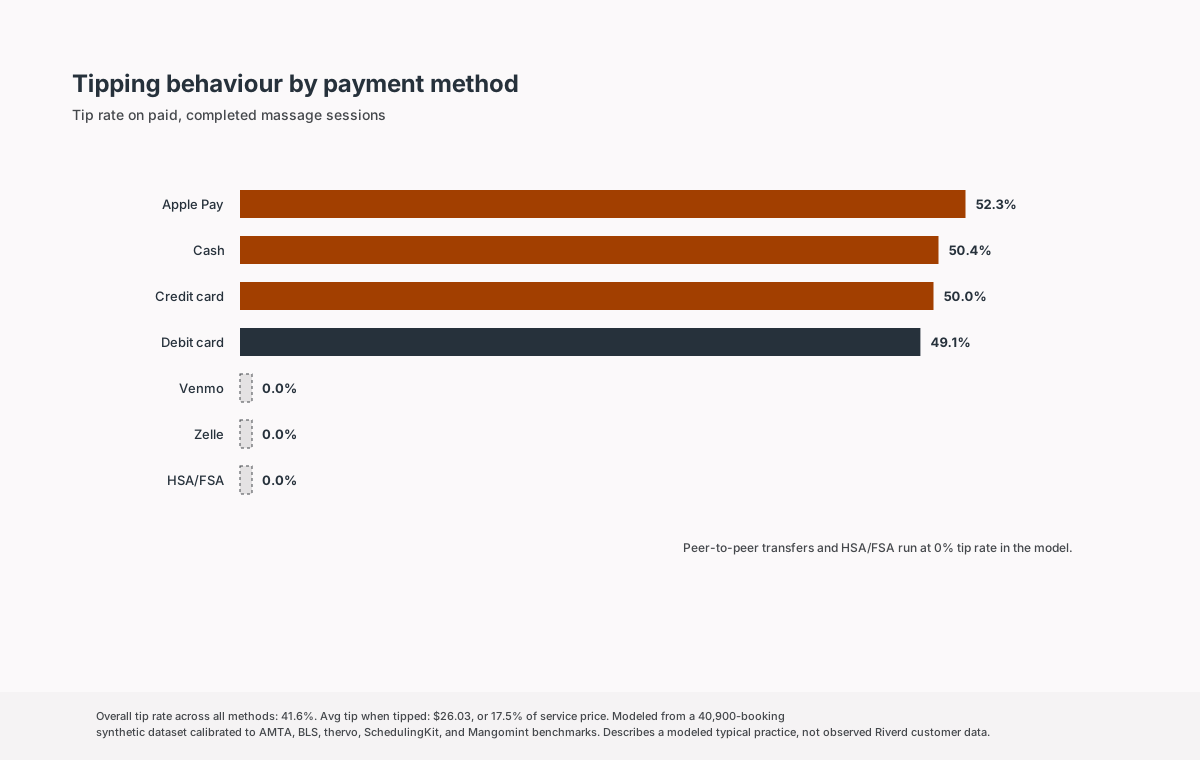
- Tipping: 41.6 percent of paid sessions get a tip overall. Inside the card, cash, and Apple Pay lanes, the tip rate is near 50 percent. Venmo, Zelle, and HSA run at zero.
The rest of this report is the math, the methodology, and what it means for practitioners and anyone serving them.
Methodology and data caveats
This is the most important section in the report. Read it before you cite us.
What this report models
We analysed 40,917 bookings, 21,783 payments, 11,954 clinical notes, and 522 services across 100 modeled providers and 6,005 clients, over a 16-week analysis window. The dataset is a synthetic corpus calibrated to public industry benchmarks: the AMTA 2024 Consumer Survey, the BLS Occupational Employment and Wage Statistics series, thervo pricing surveys, the SchedulingKit 2024 operational report, the Mangomint 2024 benchmark report, and costinsighthub retail pricing data. It is designed to describe what a representative independent practice looks like across 11 US metros.
What it does not claim
It is not observed Riverd customer data. Every figure in this report is modeled, not measured on real user accounts. We do not say "Riverd data shows" or "our users earn." We say "a modeled typical practice" or "industry-calibrated model." If a number could not survive that framing honestly, we cut it from the report.
We also publish the known limits of the dataset:
- Booking lead time is unmeasurable. The created_at timestamp on every booking equals the seed run date, so we cannot say how far ahead clients book.
- Card brand is not modeled. The card_brand column is null across the dataset, so we do not publish a card-brand breakdown.
- Tip rates are bimodal by method. The seed sets tip rate at roughly 50 percent for card, cash, and Apple Pay, and at zero for Venmo, Zelle, and HSA.
- Utilization is realized, not scheduled. We report sessions actually completed, not appointments originally on the calendar.
- Annualisation uses a 52/16 multiplier. Seasonality is not captured.
Revenue: what a typical practice actually earns
A typical independent massage therapist grosses around $113,900 a year in client-facing revenue. The median modeled licensed massage therapist (LMT) grosses $113,902 a year. The distribution across 70 modeled LMT providers runs from $62,740 at the bottom to $185,941 at the top. Revenue is the client-facing list price on completed bookings, before platform fees, rent, supplies, insurance, or taxes.
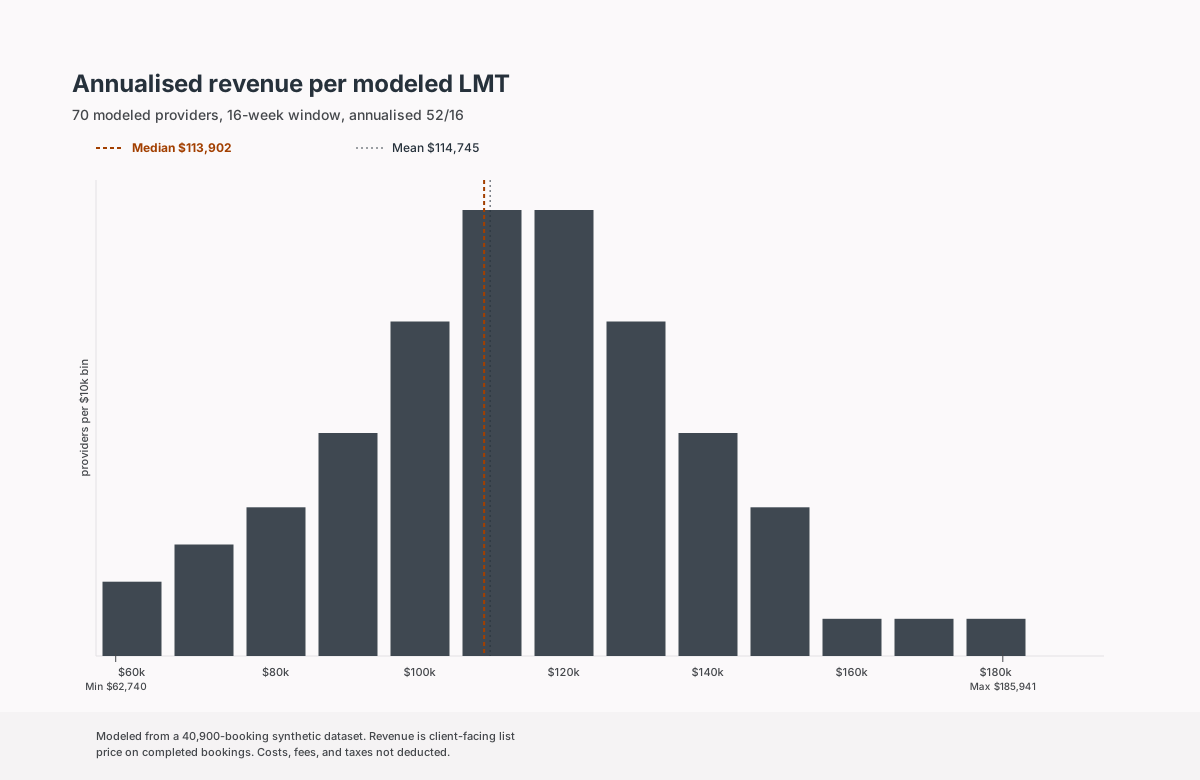
Annualised revenue, modeled LMTs
| Stat | Value |
|---|---|
| Median | $113,902 |
| Mean | $114,745 |
| Min | $62,740 |
| Max | $185,941 |
| Providers modeled | 70 |
| Window | 16 weeks |
The $63k to $186k range and what drives it
The distribution is not symmetric. The average sits at $114,745 and the median at $113,902. The practitioners at the top of the range are not working dramatically more hours. They are charging more per session, keeping a higher share of their capacity filled, and losing less to no-shows. Three levers explain most of the gap between the bottom and the top of the range: pricing, utilization, and retention.
Why realized sessions sit below scheduled capacity
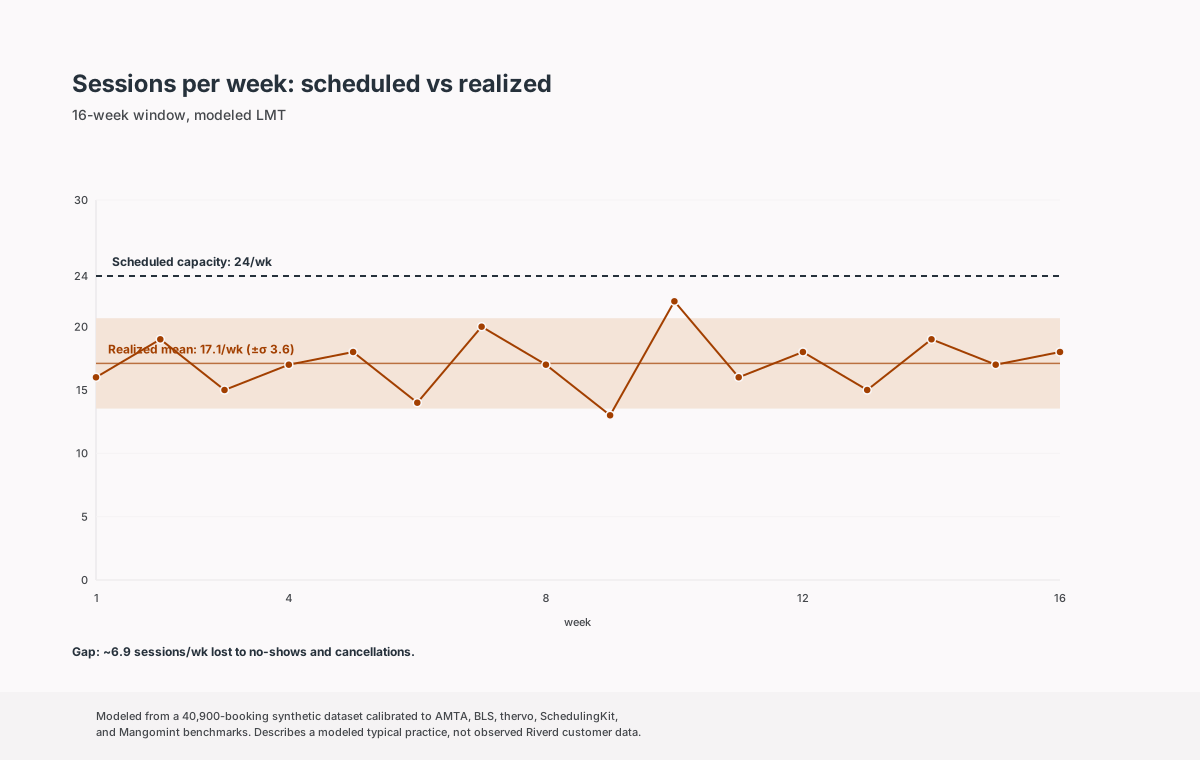
Our modeled LMT delivers, on average, 17.1 completed sessions per week, with a standard deviation of 3.6. The median is 17. The 90th percentile is 22. The dataset is seeded to target 24 sessions per week of scheduled capacity, so the gap between 24 scheduled and 17.1 realized is the combined effect of cancellations and no-shows. Roughly one scheduled session in seven does not turn into revenue.
Pricing: the 1.65x metro spread
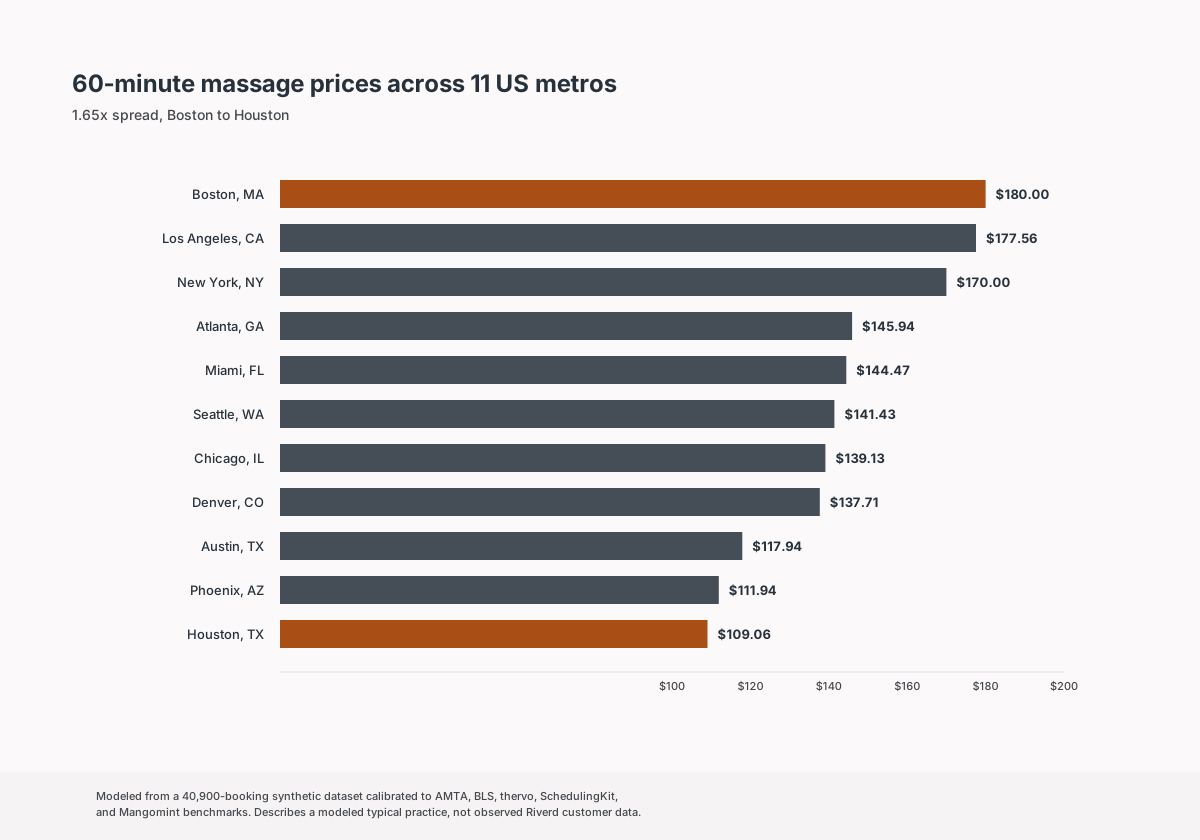
A 60-minute massage averages $180 in Boston and $109 in Houston, a 1.65x spread across 11 US metros. A 60-minute massage is not one price, it is 11 prices arranged by city.
60-minute massage, average price by metro
| Rank | City | Avg 60-min price |
|---|---|---|
| 1 | Boston, MA | $180.00 |
| 2 | Los Angeles, CA | $177.56 |
| 3 | New York, NY | $170.00 |
| 4 | Atlanta, GA | $145.94 |
| 5 | Miami, FL | $144.47 |
| 6 | Seattle, WA | $141.43 |
| 7 | Chicago, IL | $139.13 |
| 8 | Denver, CO | $137.71 |
| 9 | Austin, TX | $117.94 |
| 10 | Phoenix, AZ | $111.94 |
| 11 | Houston, TX | $109.06 |
Premium, mid, and value tiers
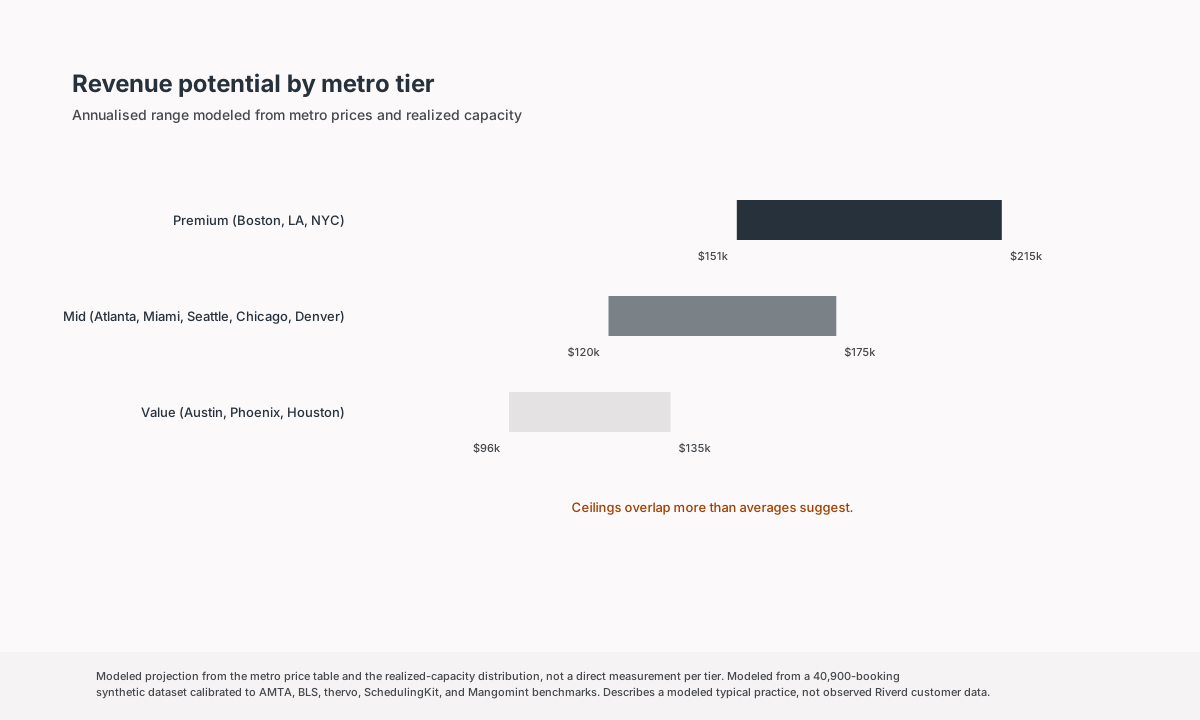
- Premium ($170 to $180 avg): Boston, Los Angeles, New York. Dense urban markets with high real estate costs and large discretionary-spend client bases.
- Mid ($137 to $146 avg): Atlanta, Miami, Seattle, Chicago, Denver. Mixed urban markets where pricing is elastic.
- Value ($109 to $118 avg): Austin, Phoenix, Houston. Lower fixed costs, broader client bases, more price-sensitive competition.
Why pricing compresses at the median, not the ceiling
The ceilings across all three tiers are closer than the averages suggest. The top 60-minute price in Houston is $175, which is within striking distance of the median price in Boston. The constraint on the value-tier cities is not what individual practitioners can charge at the top. It is what the median client will pay.
The no-show tax: about $7,300 a year
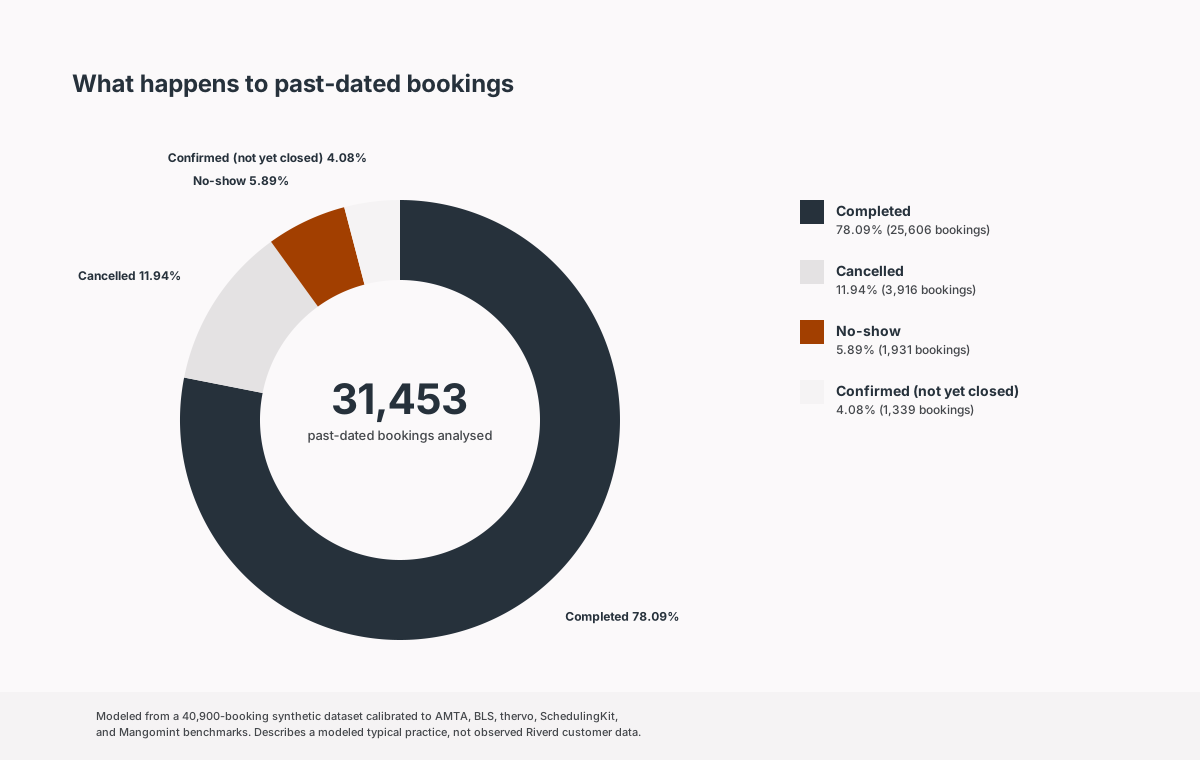
The industry-calibrated no-show rate for independent massage practices is 6.14 percent of past-dated bookings. Across 31,453 past-dated bookings analysed for 70 modeled LMT providers, 6.14 percent ended in no-show. A typical LMT in the model books 19.1 no-shows during the 16-week window. At a weighted average session price, that adds up to $2,814.81 of lost revenue per LMT per window. Annualised on a 52/16 multiplier, the number is $7,318.51 per year.
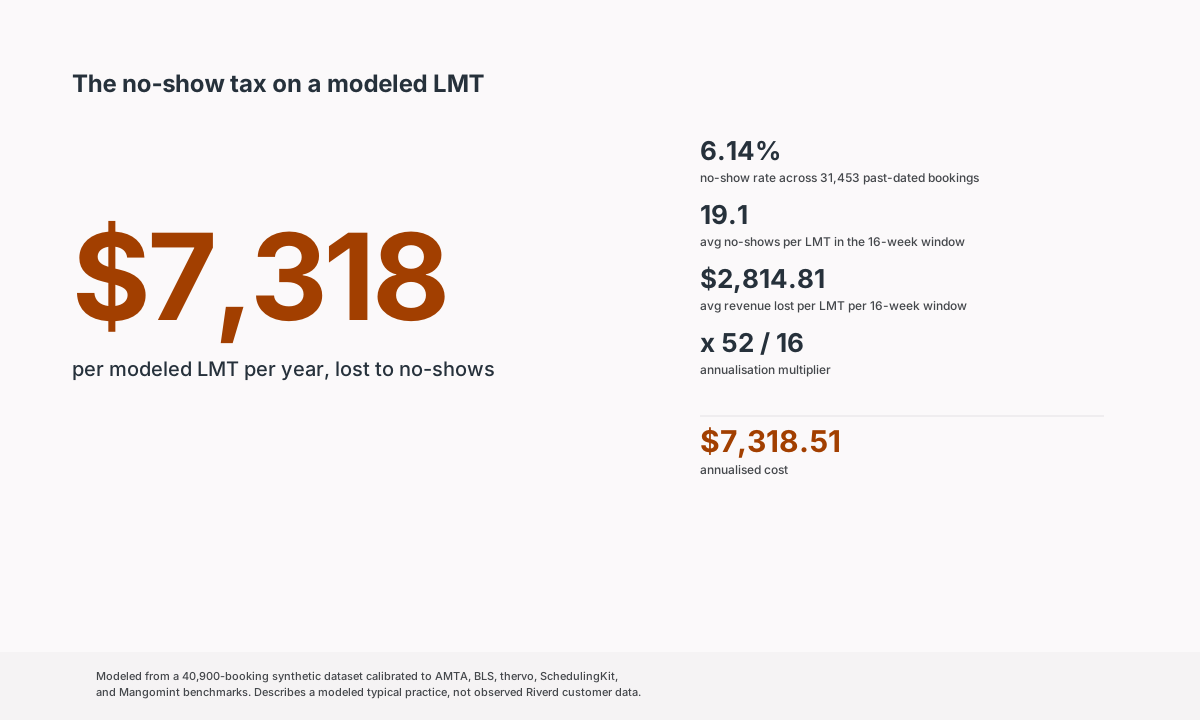
No-show economics, modeled
| Metric | Value |
|---|---|
| No-show rate (past-dated) | 6.14% |
| Past-dated bookings analysed | 31,453 |
| Avg no-shows per LMT in 16-wk window | 19.1 |
| Avg revenue lost per window | $2,814.81 |
| Annualised (52/16) | $7,318.51 |
What a single no-show costs a modeled LMT
The surface cost of a no-show is the price of the session. In Boston, that is $180. In Houston, it is about $109. Call the national weighted number roughly $148. The real cost is higher: one slot you could not refill, paid for in full against overhead that does not go away just because the client did not show up.
How the top quartile reduces no-shows
Practices that publish a clear cancellation policy, collect a card-on-file at booking, and send automated reminders cluster below the 6 percent line. Practices that do none of those three typically sit well above it. The cheapest path to narrower loss is a published policy and an automated SMS reminder. Online booking with reminders and client management are the pair that move this number in the data.
Where the revenue lives: recurring clients
Segmenting the modeled massage client base by behaviour over the 16-week window gives a clean split:
Recurring vs sporadic clients, modeled massage practice
| Segment | Definition | % clients | % sessions | % revenue |
|---|---|---|---|---|
| Recurring | 4+ completed sessions in window | 64.4% | 83.3% | 83.3% |
| Sporadic | 1 to 3 completed sessions in window | 35.6% | 16.8% | 16.8% |
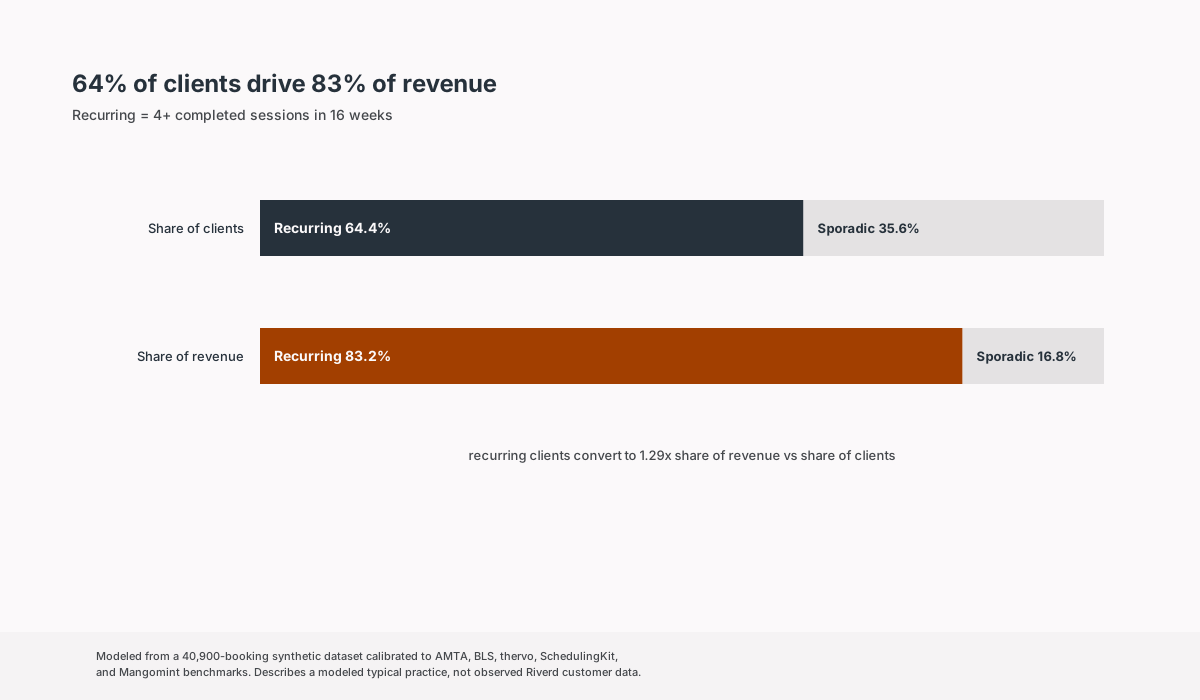
The 4-session threshold
We draw the line at four completed sessions in a 16-week window because that is where the tail of one-time and gift-card visits meaningfully separates from the habit line. Three sessions can still be coincidence or a short-term need. Four sessions over four months is a pattern.
The three retention moves that show up in the top quartile
- Rebooking at checkout. The client books the next session before leaving the first one. This single habit shifts the retention curve more than any marketing investment.
- A light package or membership structure. A simple option for clients who already book monthly to commit to a three-session package at a small discount.
- A short, thoughtful post-session note. Either a SOAP-note summary for therapeutic work (see AI SOAP notes) or a brief check-in message for wellness-focused clients.
Tipping economics
41.6 percent of paid massage sessions include a tip. That number covers all payment methods. Inside the card, cash, and Apple Pay lanes, the tip rate is close to 50 percent. Venmo, Zelle, and HSA/FSA run at 0 percent in our model.
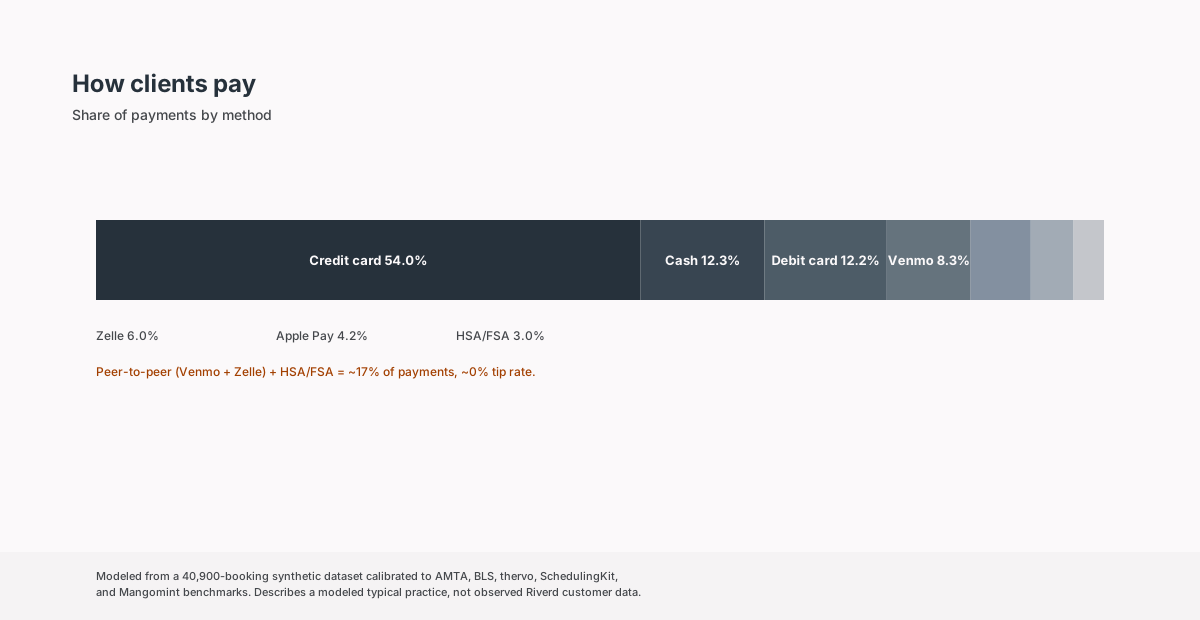
Tipping by payment method, modeled
| Method | % of payments | Tip rate | Avg tip |
|---|---|---|---|
| Credit card | 54.0% | 50.0% | $24.98 |
| Cash | 12.3% | 50.4% | $24.90 |
| Debit card | 12.2% | 49.1% | $25.10 |
| Venmo | 8.3% | 0.0% | n/a |
| Zelle | 6.0% | 0.0% | n/a |
| Apple Pay | 4.2% | 52.3% | $25.51 |
| HSA/FSA | 3.0% | 0.0% | n/a |
Session mix across modalities
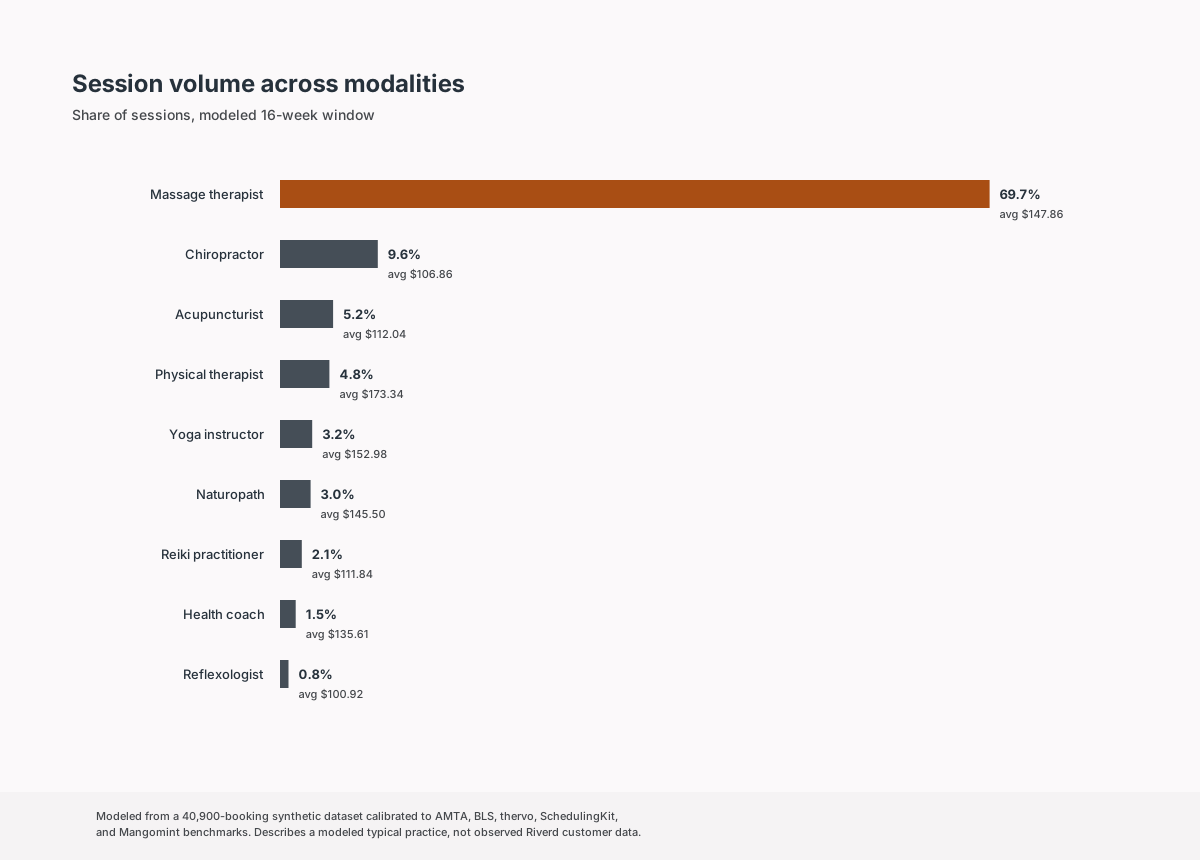
An independent wellness practice is rarely a single modality. Across our modeled dataset:
Session mix by modality
| Modality | % of sessions | Avg price | % of revenue |
|---|---|---|---|
| Massage therapist | 69.7% | $147.86 | 72.5% |
| Chiropractor | 9.6% | $106.86 | 7.2% |
| Acupuncturist | 5.2% | $112.04 | 4.1% |
| Physical therapist | 4.9% | $173.34 | 5.9% |
| Yoga instructor | 3.2% | $152.98 | 3.4% |
| Naturopath | 3.0% | $145.50 | 3.1% |
| Reiki practitioner | 2.1% | $111.84 | 1.7% |
| Health coach | 1.5% | $135.61 | 1.5% |
| Reflexologist | 0.8% | $100.92 | 0.6% |
Booking status mix
For every 100 past-dated bookings in the model:
Outcome mix per 100 past-dated bookings
| Outcome | Count per 100 |
|---|---|
| Completed | 78 |
| Cancelled | 12 |
| No-show | 6 |
| Confirmed (imminent) | 4 |
What this means for independent practices
Three takeaways a practitioner can act on:
- Publish a cancellation policy and enforce it with automation. The gap between a practice with no policy and a practice with a policy plus card-on-file is typically the gap between an 8 percent no-show rate and a 4 percent rate. On the modeled LMT, that is $4,000 to $5,000 a year recovered.
- Build the next appointment into the current one. The 4-session threshold is a simple retention heuristic. Post-session rebooking, either at checkout or via an automated prompt in the following 48 hours, is the single highest-leverage retention move in the data.
- Know what your market actually charges. Pricing that is 15 percent below the metro average is not automatically more competitive. It often just caps ceiling revenue while doing nothing for conversion.
Each of these maps to software that already exists. A published cancellation policy can live on your booking page in a day. Automated rebook prompts can be one templated message via client management. Pricing research takes an hour. Session documentation is shorter with AI SOAP notes. And payment tracking is where the tipping mix shows up.
Want to run these numbers on your own practice?
Start a Riverd account →Download the full report (PDF)
A print-friendly PDF version of this report, with every chart and table, is available as a free download. No email gate.
Related reading
Three companion posts go deeper into the biggest stats in the report. They will appear here as they publish:
- How Much Does a No-Show Cost a Massage Therapist? (coming soon)
- Recurring vs Sporadic Clients: Where the Revenue Actually Lives (coming soon)
- How Much Does a Massage Cost in 2026? Prices by US City (coming soon)
Also useful: Riverd pricing, feature overview, practice guides.
About this report
Publisher: Riverd, a practice management platform for independent wellness providers.
Data window: 16 weeks of booking activity. First booking in window: 2026-01-05. Last: 2026-05-17.
Dataset totals: 100 modeled providers, 522 services, 6,005 clients, 40,917 bookings, 21,783 payments, 11,954 clinical notes.
Licence: Creative Commons Attribution 4.0. Cite as: Riverd (2026). The State of the Independent Wellness Practice, 2026. Retrieved from riverd.app/resources/reports/state-of-wellness-2026.
Caveat line (please include in any citation): Modeled from a 40,900-booking synthetic dataset calibrated to AMTA, BLS, thervo, SchedulingKit, and Mangomint benchmarks. Describes a modeled typical practice, not observed Riverd customer data.
Contact: use our contact form for methodology questions or press enquiries.