
By the Riverd Editorial Team. Last updated: 2026-06-28.
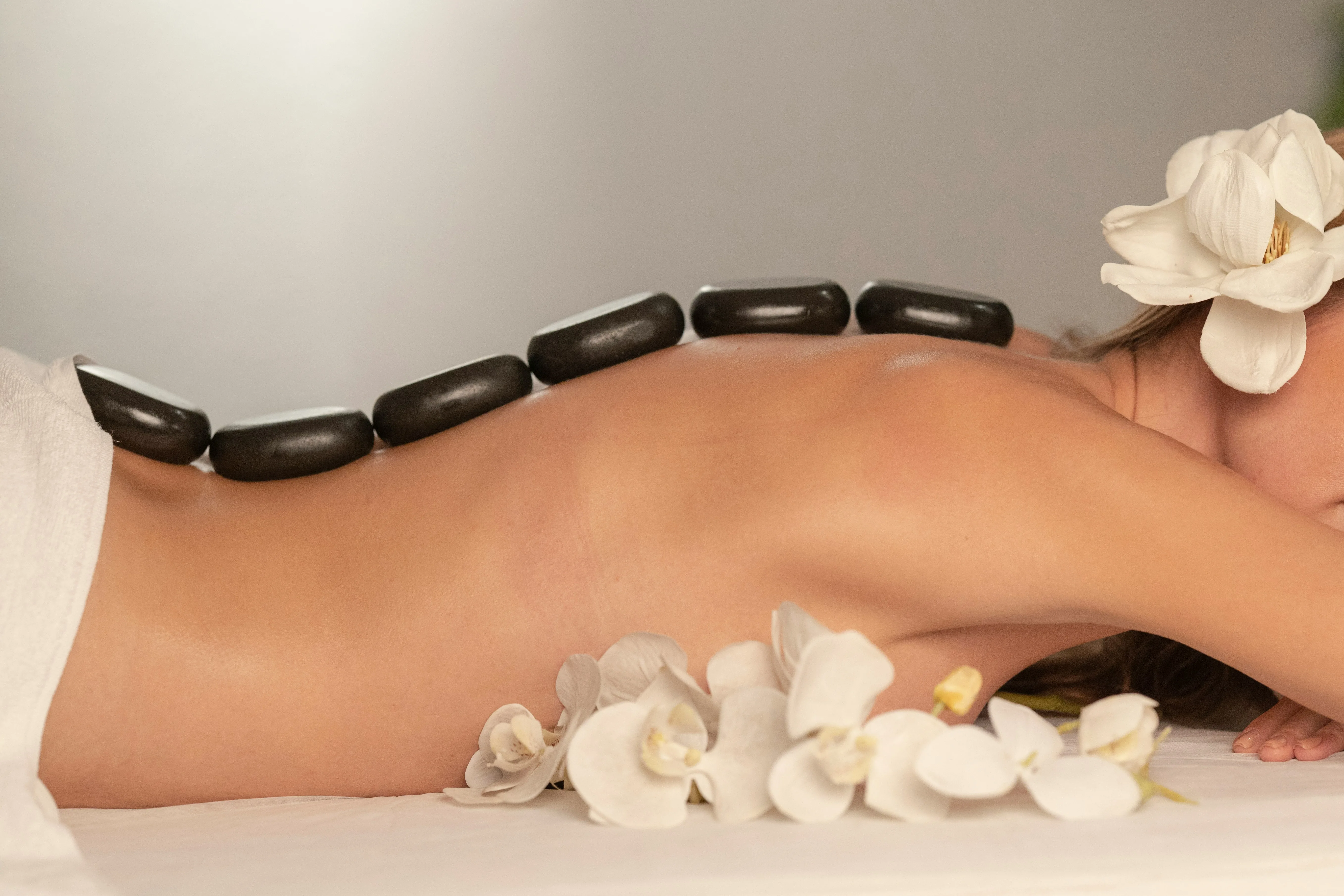
Hot stone massage uses smooth, heated stones as an extension of your hands, letting warmth do part of the work your thumbs would otherwise carry. Done well, it relaxes muscle tissue faster than touch alone, lets you work deeper with less effort, and gives clients a session they remember and rebook. This guide covers the technique end to end: the stones, the heating, the safety lines that matter, a workable sequence, and how to offer it as a service people can book.
A note before you start. Heat is a clinical tool, and the same warmth that makes this modality feel wonderful can burn or harm the wrong client. Treat the safety section below as the part that matters most, work within your training and local scope of practice, and screen every client for contraindications before a single stone touches skin.
What is hot stone massage, and how does it work?
Hot stone massage is a form of thermotherapy. You place and glide heated stones, usually basalt, along the body so the warmth raises local tissue temperature and relaxes muscle. Basalt is the stone of choice because it is dense, smooth, and holds heat for a long time, which is exactly what you want when a stone has to stay warm through several minutes of gliding work.
The mechanism is simple and worth understanding. Warmth increases circulation to the area and helps muscle fibers let go, so tissue that would resist a cold-handed deep stroke softens and opens. That means you can reach deeper layers with gentler pressure, which protects your thumbs and wrists over a long career. For the client, the feeling is less about being worked on and more about heat sinking in, which is why the modality reads as deeply relaxing even while you do real structural work underneath.
It pairs naturally with the strokes you already use. Effleurage and petrissage carry over directly, with the stone simply becoming the tool that delivers them. If you already offer Swedish and deep work, hot stone sits comfortably alongside both. For the difference between those two foundational styles, see our guide on deep tissue versus Swedish massage.
What stones and equipment do you need?
A working hot stone setup is smaller than people expect. The core is a graded set of basalt stones, typically 40 to 60 pieces in mixed sizes: large flat stones for the back and the larger muscle groups, medium ovals for the limbs, and small stones for hands, feet, and between the toes. Buy a quality set once rather than replacing a cheap one twice, since smooth, evenly shaped stones glide better and chip less.
The piece of equipment that actually matters is a professional stone heater with a thermostat. A heater built for the job holds a stable water temperature and is far safer than a slow cooker or a pan on a burner, both of which run hot and uneven. Add a kitchen thermometer as a backup check, a slotted spoon or ladle to lift stones out of the water, a towel to dry and buffer each stone, and a way to sanitize stones between clients.
Everything else is the kit you already own: oil or lotion with enough slip for long strokes, table linens, and a clean towel barrier for any stone that will rest in place. You do not need a large investment to begin, which is part of why hot stone is one of the more practical premium services a solo practitioner can add.
How do you heat and handle stones safely?
This is the section to read twice. Basalt stones for body work are generally held in the rough range of 120 to 140 degrees Fahrenheit (about 49 to 60 degrees Celsius), but the number on the thermostat is never the final word. Heat fades as you carry a stone to the table, so you check every stone against your own inner forearm before it meets the client, and you keep it moving rather than parking it on skin. A stone that feels merely warm to you may still be too hot for a client with sensitive or compromised tissue.
Two habits prevent almost every problem. First, constant motion: a gliding stone disperses its heat, while a stationary one concentrates it, so placement stones always sit on a towel barrier, never bare on skin. Second, you ask the client to tell you the moment anything feels too warm, and you mean it, because client feedback is your most reliable thermometer. Never assume comfort, and never leave a hot stone resting on someone while you turn away.
Screening comes before any of this. Heat is contraindicated or needs medical clearance in a long list of situations: areas of acute inflammation or recent injury, varicose veins, diabetes or neuropathy with reduced sensation, cardiovascular conditions, pregnancy without specific training, broken or irritated skin, and anyone who cannot reliably report how the heat feels. When in doubt, leave the heat out and work by hand. Sanitize the full stone set between clients as you would any tool that touches multiple bodies. None of this is medical advice; follow your training, your manufacturer guidance, and your local regulations.
What does a full hot stone sequence look like?
A clean sequence starts before the client is on the table, with stones already at temperature and your kit within reach. With the client prone, lay placement stones along the back over a towel barrier, keeping them off the spine itself, then begin the hands-on work with warm oil and a few minutes of effleurage by hand so the body settles and you can feel the tissue.
From there you trade your hands for stones for the gliding work: long, slow strokes down the back and across the shoulders, swapping each stone for a fresh warm one as it cools, then moving to the legs. Turn the client supine and repeat the pattern on the arms and the fronts of the legs, with small stones for the hands and feet if time allows. The rhythm of working a stone, feeling it cool, and reaching for the next becomes second nature within a handful of sessions.
The whole modality rewards unhurried pacing, which is why most practitioners price and book it as a 75 or 90 minute service rather than a standard 60. The extra time is not padding; it covers heating, the slower strokes the heat invites, and the reset between clients. Many practitioners also pair the warmth with scent, which folds in beautifully. If that interests you, see integrating aromatherapy into your massage practice, and browse the rest of our modalities hub for adjacent techniques.
How do you add hot stone massage to your service menu?
Because hot stone carries real setup, heating, and maintenance time, it usually earns a premium over your standard rate, and clients generally accept that the warmth and the longer session are worth more. Decide your duration and price together: a 90 minute hot stone session at a higher rate often makes better economic sense than squeezing it into a 60 minute slot at a small uplift.
Once you have set the offering, make it something a client can actually book without a back-and-forth message. List hot stone as its own named service with its own duration and price on your service and pricing page so it shows up alongside your other work and people can choose it directly. A premium service that is hard to book is a premium service that rarely sells, so the menu listing is the step that turns a skill into revenue.
Key Takeaways
- Hot stone is thermotherapy: heated basalt stones raise tissue temperature so muscle relaxes, letting you work deeper with gentler pressure and less wear on your hands.
- The equipment that matters is a thermostat-controlled professional stone heater, not a slow cooker. Add a graded basalt set, a thermometer, a ladle, and a way to sanitize between clients.
- Safety is the whole game: hold stones in roughly the 120 to 140 degrees Fahrenheit range, test every stone on your own forearm, keep them moving, use a towel barrier, and screen for heat contraindications first.
- Price and book it as a premium, longer service. Listing hot stone as its own bookable service with its own duration and price is what turns the skill into income.
Ready to simplify your practice? Start Free →